
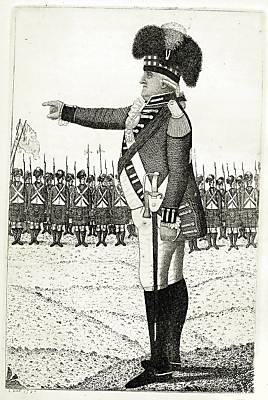
Air 23 Cèitean 1794, chuir Eanraig Dundas (‘An t-Aintighearna Mòr’, 1742-1811), Rùnaire na Stàite airson Cogadh, litir gu Tighearna an t-Seula Dhìomhair, Marquess Stafford (1721-1803). Na broinn, thug e seachad am fiosrachadh as ùire bho Alba mu na bha na h-ùghdarrasan air faighinn a-mach mu ghnìomhan radaigeach. Tha e a’ bruidhinn mu Charaidean nan Daoine, mun iarrtas a bha aig na ceannaircich air armachd a thrusadh ’s a dhèanamh, agus air cuilbheart a bha ann – ma b’ fhìor – ann an Dùn Èideann. Agus tha e cuideachd ag innse mu phàipear no bileag radaigeach, chlò-bhuailte ann am Beurla, a bha ‘industrially circulated’ am measg nan dìon-fheachdan (na fencibles). Chan e a-mhàin sin, ach tha a’ cur lethbhreac dhen teacsa an cois na litreach.
Chaidh rèiseamaidean fencible a thogail air a’ Ghàidhealtachd bho 1759 gus an dùthaich a dhìon bho ionnsaighean le armailtean cèin, ach gu sònraichte na Frangaich. Thòisich cogadh eadar Breatann agus an Fhraing Rèabhlaideach ann an 1792, mar sin, bha an t-eagal air an riaghaltas gum faodadh lunnadh (invasion) a bhith ann, agus b’ e dleastanas nan dìon-fheachdan a bhith ullamh airson sin. Bha iad stèidhichte airson na mòr-chuid air a’ Ghalltachd, Sasainn, agus an uair sin ann an Èirinn – a’ sabaid an aghaidh Éiri Amach 1798.
Tha e iongantach gu bheil a’ bhileag seo ann agus gu bheil sinn comasach air argamaidean nan radaigeach a leughadh. Bha iad a’ feuchainn ri conaltradh ri Gàidheil/Highlanders, agus b’ e an t-amas a bha aca am brosnachadh gun a bhith a’ dol a shabaid às leth arm Bhreatainn ann an dùthchannan cèine. Mar sin, bha iad ag iarraidh orra fuireach nan dùthaich fhèin – a’ Ghàidhealtachd – agus na daoine aca fhèin a dhìon. Carson? Dh’fhaodadh gun robh na radaigich a rinn am propaganda-sa airson taic a chuir ris an rèabhlaid san Fhraing, a bha fo bhagairt Bhreatainn agus nan dùthchannan eile sa Chiad Cho-bhanntachd. Tha e cuideachd fillte a-staigh san teacsa gun robh na feachdan seo – agus tha sinn a’ gabhail ris gum b’ e na dìon-fheachdan a bha annta a rèir tuairisgeul Dundas – gan cur gu feum an aghaidh ‘the great mass of the people’. Gu dearbh, bha sin fìor. Bhà na dìon-fheachdan nam poileas armaichte, mar gum b’ eadh, an aghaidh radaigeach agus càch air feadh Bhreatainn is Èireann. Bhiodh na h-ùghdaran, ge bith cò iad, airson na nàimhdean seo iompachadh no an cur air feadh a chèile.
Thoir fa-near na puingean a tha gan dèanamh cuideachd. ‘[N]o man can be compelled to take up arms, by any authority whatsoever […].’ Cha robh Achd na Mailisidh, a stèidhich cumhachdan airson togail riatanach don arm, ann gu 1797. Ach tha e ri thuigsinn san teacsa gun robh Gàidheil air an co-èigneachadh gus gabhail san arm, air sgàth iarmad de chumhachd nan cinnidhean aig na h-uachdarain. Mar sin: ‘the law ought to be the same to the Highlander and to the Lowlander’.
Tha argamaidean làn fhaireachdainnean gan dèanamh, air an cuimseachadh gu dìreach air na Gàidheil. Cò bhitheadh a’ dìon teaghlaichean nan saighdearan mura robh iad an làthair? Chan eil e soilleir cò dha-rìribh a bhagradh orra, mura h-e na Frangaich fhèin agus bhiodh sin a’ fàgail na h-argamaid beagan na bu cheòthaiche. Agus an t-iomradh air Murt Ghlinne Comhann! An e dìreach propaganda amh a tha seo? Air dòigh, ’s dòcha, ach aig an àm bha na radaigich ag argamaid an aghaidh ‘Bun-reachd’ 1688 – is iad airson bun-reachd ùr dheamocratach a chur ri chèile, a stèidhicheadh còirichean nan daoine. Bha am murt ainmeil ann an 1692 ceangailte ri mar a dh’fhàillig air cuid de Ghàidheil, Dòmhnallaich Ghlinne Comhann, ùmhlachd thràthail a nochdadh do Rèabhlaid Ghlòrmhor 1688. ’S e seann ana-ceartas roinneil a bha seo, ach b’ e eisimpleir a bha ann de dh’ana-ceartas mòr leantainneach na stàit Bhreatannaich.
B’ urrainnear corra rud eile a ràdh. Chaidh a’ bhileag a chlò-bhualadh ann an Dùn Dè. Cò iad a sgrìobh i? Agus an deach a cuairteachadh am measg rèiseamaid shònraichte? A bheil eisimpleirean eile den aon seòrsa rud ri lorg?
Co-dhiù no co-dheth, mar a thuirt mi, chaidh na dìon-fheachdan a chleachdadh gu soirbheachail ann a bhith a’ ceannsachadh dhaoine air feadh na dùthcha. Chan eil coltas ann gun robh a leithid seo de phropaganda buadhach. Chìthear an tagradh-sa aig a’ bhonn:
Leave not your country – Assert your independence. Your countrymen will look up to you as their Protectors and Guardians, and will in their turn lift up their arms to protect and assist you.
Chan eil sin a’ faireachdainn ach mar iarrtas fada ro dhàna san t-suidheachadh – a rèir na ’s aithne dhuinn a-nise. Ach bha ceannairc is aramach, .i. mutinies, gu leòr ann am feachdan Bhreatainn, agus am measg nan Gàidheal, san 18mh linn – mar a leughar anns an eachdraidh phoballaich aig John Prebble, Mutiny: Highland Regiments in Revolt, 1743-1804 (1975). Cha b’ ann air adhbharan mòra poileataigeach a rachadh saighdearan an aghaidh an cuid oifigeach, mar as àbhaist, ach air sgàth dìmeas agus droch-dhìol. Nam faiceadh gnàth-shaighdearan pàipearan den t-seòrsa seo, ge-tà, nam biodh iad comasach air a thuigsinn ’s air a chnuasachadh, cò aige a tha fios nach cuireadh e ris na gearanan a bha aca? Bhiodh e doirbh an ceangal sin a lorg anns an fhianais a tha air fhàgail againn.
Thog criomag bheag fiosrachaidh m’ ùidh. Sgrìobh an t-eachdraiche Henry William Meikle seo: ‘According to English newspaper reports, the Highland regiments had lately refused to fire on the United Irishmen’. (*) Bu mhath leam barrachd a chluinntinn mu a leithid sin, air cho ainneamh ’s gun robh e.
~~~
[…] It appears likewise from indisputable facts that the most secret and artful means have been and are still using [sic] with the fencible regiments in Scotland to excit them to disobedience and mutiny, The printed paper which I herewith transmit, has been industriously circulated for that purpose. I have the honour to be, my lord, &c.
HENRY DUNDAS
Marquis of Stafford.
Inclosed in Mr. Dundas’s letter to lord Privy Seal, dated May 23rd, 1794.
(Copy.)*
Friends and Brethren; – It is with the greatest pleasure that your countrymen are informed, that such is your attachment and love to them, and to your native country, that you manfully and firmly resolve not to leave it upon any terms contrary to those upon which you were first engaged. Your countrymen love you; and their hearts would be as much wounded to part with you, as yours would be to be separated from them. They well know that they are safe under the protection of their fathers their sons, their brothers in arms; and they neither wish nor desire any other defenders. – They hope and believe that your hearts are filled with the same sentiments.
The great mass of the people, from amongst whom you have inlisted, have been represented to you as your enemies; believe not the assertion; they have been taught to consider you as foes; but they do not fear finding friends among their brethren.
Their cause and yours is the same. – They are poor, but they have honest hearts; hearts which sympathise in your cause, they look for the same friendship and the same sympathy in you. They rejoice to hear that you are becoming daily more convinced of the great truth that the law ought to be the same to the Highlander and to the Lowlander; † to the rich and to the poor; and that no man can be compelled to take up arms, by any authority whatsoever, unless his own inclinations prompt him so to do.
The truth has been hitherto carefully concealed from you, but it is not less certain. The will of your Laird cannot without your own consent, separate you from your families and friends, although many of you may have experienced the exertions of such a power, however unjust, and however contrary to law.
We respect and admire the principle which induces you (though necessity has compelled you to take up arms) still to persist in remaining to defend your friends at home; and not to quit a country which holds pledges so dear.
When you are gone, where is their defence? – They may be either left without protection or may soon see their country over run, by foreign troops; such as in time past have already shed the blood of your ancestors without provocation and without remorse; and who would feel perhaps as little compunction in shedding theirs.
Prepared for every deed of horror, these foreign mercenaries may violate the chastity of your wives, your sisters, and your daughters, and, when desire is satiated, cruelty may resume its place in their hearts, as experience has too well and too fatally shown; and friends parents, children, brothers, may be involved in one common slaughter. The cruel massacre of Glencoe cannot yet be forgotten: Are there not amongst you whose forefathers perished there? Their hearts, throbbing with kindness and hospitality, were pierced with the daggers of their treacherous guests; and the feast prepared by the hand of unsuspecting friendship was closed with a scene of blood ! Such is the return for kindness and hospitality ! Such the protection which your families have to expect ! ! !
How will they then look around in vain for your protecting care, when perhaps you are fighting at a distance in a foreign land? But they hope you will not forsake them[.] Stay, oh stay, and defend your families and friends! for that purpose along you were inlisted[.] They are ready to come forward for you in the vindication of your rights.
Thousands join in the same sentiments with you, and ardently wish for your continuance amongst them. The circumstances which might require you to quit your country have not yet taken place. No invasion has yet happened. You cannot be compelled to go. Leave not your country – Assert your independence. Your countrymen will look up to you as their Protectors and Guardians, and will in their turn lift up their arms to protect and assist you.
Dundee, April 12th, 1794.
* The words in Italics are in large letters in the printed copy.
† Sic. in orig. [Nòtaichean ann mar-thà ann an Cobbett (1818).]
~~~
Tùs: William Cobbett, deas., The Parliamentary History of England from the Earliest Period to the Year 1803, Vol. XXXI (1794-1795) (Lunnainn: Clò-bhuailte le T.C. Hansard, 1818), tdd 898-900. Air a mhìneachadh mar ‘Paper distributed amongst the Fencibles’ air td. 744.
Chuala mi mun teacsa seo an toiseach ann an James D. Young, The Rousing of the Scottish Working Class, 1774-2008 (Glaschu: Clydeside Press, 2009), td. xxiv. Mo thaing don duine chòir sin nach maireann a-rithist.
(*) Henry William Meikle, Scotland and the French Revolution (Glaschu: James Maclehose & Sons, 1912), td. 176.

 A’ Cheàrdach